Subterranean Garages and Basement Construction: What Southern California Homeowners Need to Know
When clients envision their dream home in the hills above Malibu, Bel Air, or La Cañada-Flintridge, the conversation often turns to square footage. But on constrained hillside lots, building up or out isn’t always an option. The solution that separates truly exceptional luxury homes from the rest is going underground — subterranean garages, basement levels, and below-grade living spaces that unlock usable square footage without touching a home’s precious footprint or view corridors.
At Triton Engineering Contractors, subterranean construction is one of our core competencies. Since our founding in 2011, we’ve delivered single-level and multi-level subterranean concrete structures across some of Southern California’s most demanding sites — from a hillside luxury estate in Encino where we built a subterranean three-car garage, a pool house opening directly to an infinity pool, and a dedicated mechanical room housing for a 3,000-gallon saltwater aquarium — all carved into the hillside as a seamlessly integrated below-grade complex. Here’s what every Southern California homeowner and design team should understand before breaking ground.
Why Subterranean Construction Is Different in Southern California
Building underground in Southern California is unlike anywhere else in the country. Our region sits at the intersection of seismic risk, variable soils, steep hillside topography, and some of the most rigorous building codes in the nation. Geology alone can shift dramatically from one corner of a lot to another — dense decomposed granite, expansive clay, loose fill from prior grading, or fractured bedrock requiring specialized drilling can all appear on the same project. Each condition changes the shoring strategy, the foundation design, and the overall cost.
Seismic demands add another layer that can’t be overlooked. A subterranean structure must resist lateral soil pressure from all sides while simultaneously performing through a seismic event, where dynamic forces can far exceed static loads. This is why structural engineering on even a straightforward below-grade garage in Los Angeles is never a simple calculation — and why experience with these specific conditions matters so much.
Shoring: The Foundation of the Foundation
Before any excavation can begin, the earth has to be held back. Choosing the right shoring system is one of the most consequential decisions on any subterranean project, and it needs to happen during the design phase — not after the architect has finalized the drawings.
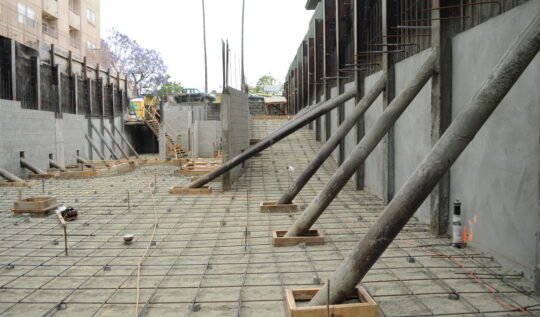
Soldier pile and lagging is the most common approach on Southern California hillside projects. Caissons are drilled and I-Beams are set at regular intervals around the excavation perimeter, with horizontal timber lagging placed between them as the dig progresses. It’s a well-proven system in drier soil conditions and where groundwater isn’t a significant factor.
Soil nail and shotcrete walls are highly effective in stable soils and produce a relatively thin wall assembly, making them efficient on sites where every inch of interior space matters. Soil nails are drilled and grouted into the earth at angles, and reinforced shotcrete is applied in lifts to create a retained face that derives its strength from the soil itself.
Tieback anchors are frequently combined with soldier pile systems when excavations are deep, when surcharge loads from adjacent structures are present, or when internal bracing isn’t geometrically feasible. Tiebacks are drilled through the shoring wall and grouted into competent soil or rock, then post-tensioned to actively resist lateral movement.
The shoring system selected has downstream consequences for wall thickness, waterproofing detailing, concrete design, and construction schedule. It’s a decision that shapes everything that follows — and one that belongs in the conversation from day one.
Excavation and Soil Export: The Cost Nobody Sees Coming
One of the most consistent surprises in subterranean construction is the true cost of moving dirt. In Southern California, excavated material can’t simply be loaded into trucks and hauled away. Depending on site conditions and history, it may need to be tested and characterized before disposal. Any contamination from prior land use can change where and when contaminated soil can be disposed of.
On hillside sites, access for excavation equipment and haul trucks is routinely constrained. Narrow driveways, steep grades, and neighboring structures limit equipment size and force creative sequencing to safely remove material. Hillside excavations simply take longer than flat-lot work, and the logistics — equipment selection, sequencing, haul route coordination — require experienced planning to keep things moving efficiently.
At Triton, we work through excavation planning in detail in order to get the right equipment, sequencing, and disposal plan in place before mobilization so that we can minimize any unforeseen delays and impacts on budget.
Concrete and Post-Tension: Where Experience Shows
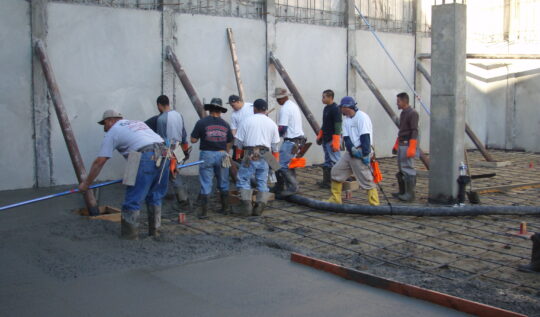
Structural concrete is the backbone of any subterranean project, and it’s where the gap between an experienced contractor and an inexperienced one becomes most apparent. Below-grade concrete walls must simultaneously function as structure, waterproofing substrate, and in many cases architectural finish — a demanding set of requirements that starts with the right mix design and ends with disciplined placement and curing.
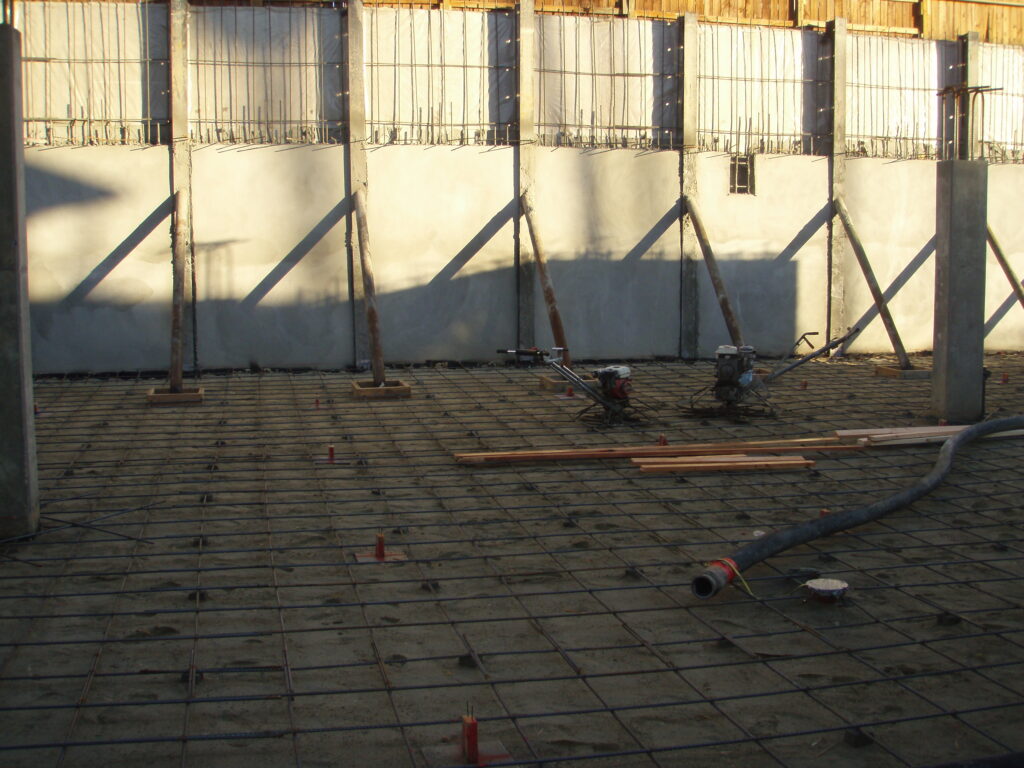
Cast-in-place walls are standard for subterranean garages and basements; typically complex formwork is needed in areas where we can achieve a 5′-0″ vertical cut with a 1:1 slope in the soil. If the 5′-0″ vertical cut and 1:1 slope is not achievable because of space constraints, then soldier pile and lagging systems are used, and the permanent wall is shotcreted directly against the lagging rather than formed and poured. Wall thickness, reinforcing density, and mix design are driven by the structural engineer’s requirements and the waterproofing system selected. Triton works closely with trades to ensure the work supports the performance expectations of the full assembly.
Post-tensioned slabs are sometimes used for below-grade floor systems, though they are not the default approach and require specialized knowledge to execute correctly — knowledge Triton has. PT systems allow for thinner slabs over longer spans, which makes them appealing in certain applications. However, there is an important long-term consideration homeowners should understand: any future coring or penetration through a post-tensioned slab requires the cables to be located first, which means X-raying the slab before any modification can be made.
The Geotechnical Report: The Document That Drives Every Decision
Before a single line is drawn for a subterranean project, one document should already be in hand — the geotechnical investigation report. Commonly called a geotech report or soils report, it is the foundation upon which every structural design decision in a below-grade project is built. Understanding how to interpret and apply this geotechnical report is a crucial component of the experienced contractor’s toolkit.
A geotechnical investigation involves drilling into the earth at strategic locations on the site to collect soil and rock samples, which are then analyzed in a laboratory. The report that comes back describes what the ground is made of, how stable it is, how it behaves under load, how much groundwater is present, and how the soil responds to lateral pressure. For a subterranean project, this information directly drives the shoring system design, the foundation type, the concrete wall design, and the drainage strategy.
What surprises many homeowners is how site-specific this information is. Two adjacent lots in the same hillside neighborhood can have dramatically different soil profiles — one may have dense decomposed granite just a few feet down, while the other encounters loose fill or expansive clay at the same depth. That difference changes the engineering, the construction method, and the cost. There is no substitute for actually drilling and finding out what is there.
The geotechnical engineer also provides recommendations for allowable bearing pressures, lateral earth pressures, and seismic site classifications — all of which feed directly into the structural engineer’s calculations. Without this input, structural design for a below-grade project is essentially guesswork.
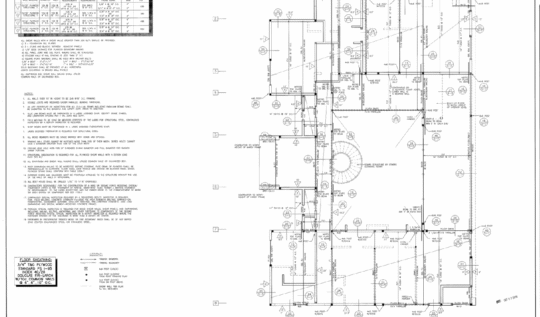
At Triton, we treat the geotech report as a working document, not a formality. We review it alongside the structural and civil drawings to develop a clear picture of what we’re facing below grade — and that preparation matters, even when the earth has other plans. Exploratory drilling can only tell you so much. The possibility of encountering unforeseen challenges below grade is always real. The ability to identify, adapt, and execute solutions quickly and efficiently is at the core of what Triton does — we lean on our experience here and use it to our strategic advantage.
Managing Trades on Complex Below-Grade Work
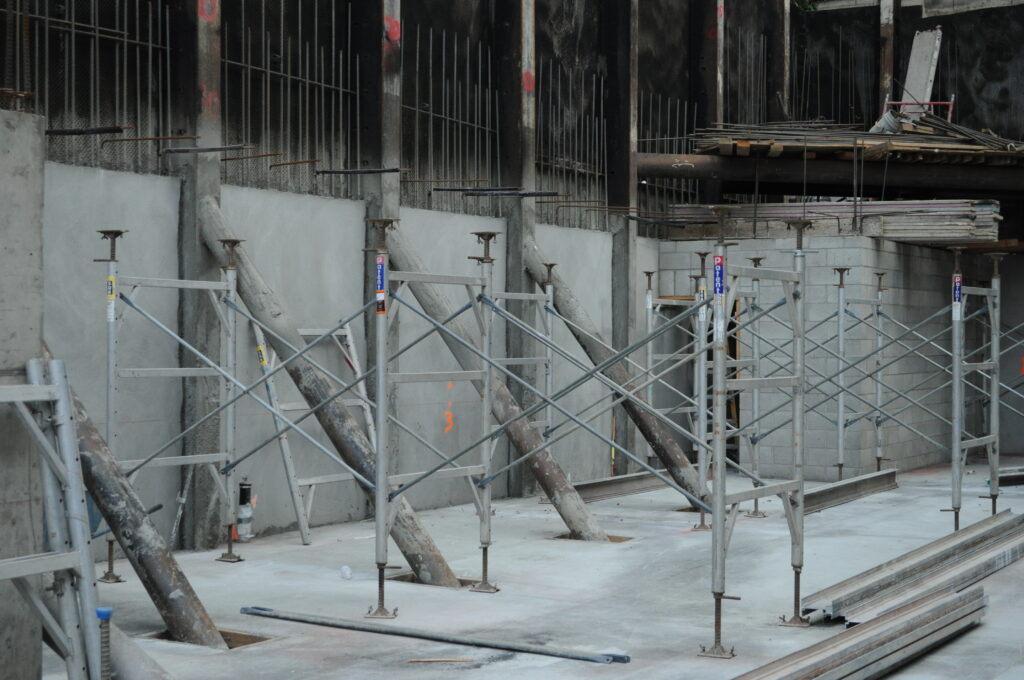
Subterranean construction is not a single-trade operation. On any meaningful below-grade project, you are coordinating with a multitude of trade partners like shoring contractors, earthwork and grading, concrete subcontractors who have their own sub-trades like reinforcing subs, as well as waterproofing and other specialty trade partners — all working in a confined, sequenced environment where the work of one trade directly sets up the conditions for the next. Managing that sequence well is what separates a smooth project from a costly one.
At Triton, our background is in the work itself. Our team has spent years in the field doing concrete, shoring, and foundation work firsthand — which means we understand what each trade needs to succeed, what can go wrong at the handoff between crews, and how to hold each phase of work to the right standard. That hands-on knowledge is not something you can replicate from an office.
Scheduling and sequencing in a subterranean project is particularly unforgiving. Excavation has to be complete and the shoring system stable before concrete can begin. Concrete walls need to cure to specified strength before backfill can be placed against them. Waterproofing and drainage systems must be installed and inspected before they are covered. Each of these dependencies creates a critical path where a delay in one phase ripples through everything that follows. Triton manages this sequencing proactively — not reactively — so that trades are mobilized at the right time with the right conditions in place to execute without interruption.
Building Below Grade, Building Right
Subterranean garages and basement construction represent some of the most technically demanding work in custom home building. Done well, they create extraordinary living space, solve site constraints that no other approach can address, and add lasting value to a property.
Triton Engineering Contractors has built our reputation on exactly this kind of complex, high-stakes work. We bring hands-on concrete and shoring expertise to every subterranean project we take on positioning us as the premier builder in this space where proper expertise is crucial to a project’s success.
If you’re planning below-grade construction in Los Angeles County, Ventura County, Santa Barbara, or Orange County, we’d welcome the conversation.
Triton Engineering Contractors, Inc. is a licensed general contractor specializing in complex custom home construction, hillside foundations, and subterranean work throughout Southern California. Founded in 2011, Triton brings exceptional technical depth to projects where the standard approach simply isn’t enough.
SEO Targets: subterranean garage construction Southern California | basement construction Los Angeles | hillside basement contractor | below grade construction custom home | shoring contractor Los Angeles
Suggested Meta Description: Subterranean garages and basements unlock square footage on constrained hillside lots — but below-grade construction in Southern California demands precision. Triton Engineering explains what homeowners need to know.