Building a luxury home on a hillside lot offers unparalleled views, privacy, and a connection to Southern California’s dramatic topography. But beneath those stunning vistas lies a foundation challenge that separates experienced specialists from contractors who are simply in over their heads.
After nearly three decades in construction and more than a decade leading Triton Engineering Contractors through some of the region’s most challenging hillside projects, I’ve seen firsthand why foundation work on sloped sites demands not just technical knowledge, but the kind of experience that only comes from solving real problems on real sites.
The Hidden Complexity of Hillside Foundations
When most people think about building on a hillside, they envision the view from the future living room. What they don’t see is what’s happening 40, 50, or even 60 feet below grade, where caissons anchor the structure to bedrock and engineered systems resist the powerful forces of gravity, water, and unstable soil.
Hillside foundations aren’t just deeper versions of flatland foundations. They’re engineered systems that must account for lateral loads, differential settlement, groundwater movement, and the constant pull of gravity on both the structure and the slope itself. The margin for error is essentially zero.
A foundation that might work perfectly on flat ground becomes inadequate, even dangerous, when adapted to a slope. The soil conditions change dramatically as you move down the hillside. Water behaves differently. Access for equipment becomes a logistical puzzle. And the coordination between geotechnical engineers, structural engineers, and the construction team must be flawless.
Why Soil Reports Are Just the Beginning
Every hillside project starts with a geotechnical investigation and soils report. This critical document tells you what you’re dealing with beneath the surface: soil composition, bearing capacity, groundwater levels, and recommendations for foundation design.
But here’s what many homeowners and inexperienced contractors don’t realize: the soils report is a starting point, not a complete answer. I’ve worked on hillside sites where conditions encountered during excavation differed significantly from what the initial report predicted. Soil composition can change within just a few feet. Groundwater can appear where it wasn’t expected. Bedrock depth can vary across the building pad.
An experienced hillside contractor knows how to read these situations as they develop, work with the geotechnical engineer to adjust the approach in real time, and make decisions that keep the project moving forward. Without this depth of experience, crucial signals can be missed, leading to approaches that don’t match what the site is actually telling you.
The relationship between the contractor and the geotechnical engineer isn’t transactional. It’s collaborative. We’re constantly communicating during excavation and foundation work, ensuring that what we’re building matches not just the plans, but the actual conditions we’re encountering.
Deep Foundations: Caissons, Piers, and Grade Beams
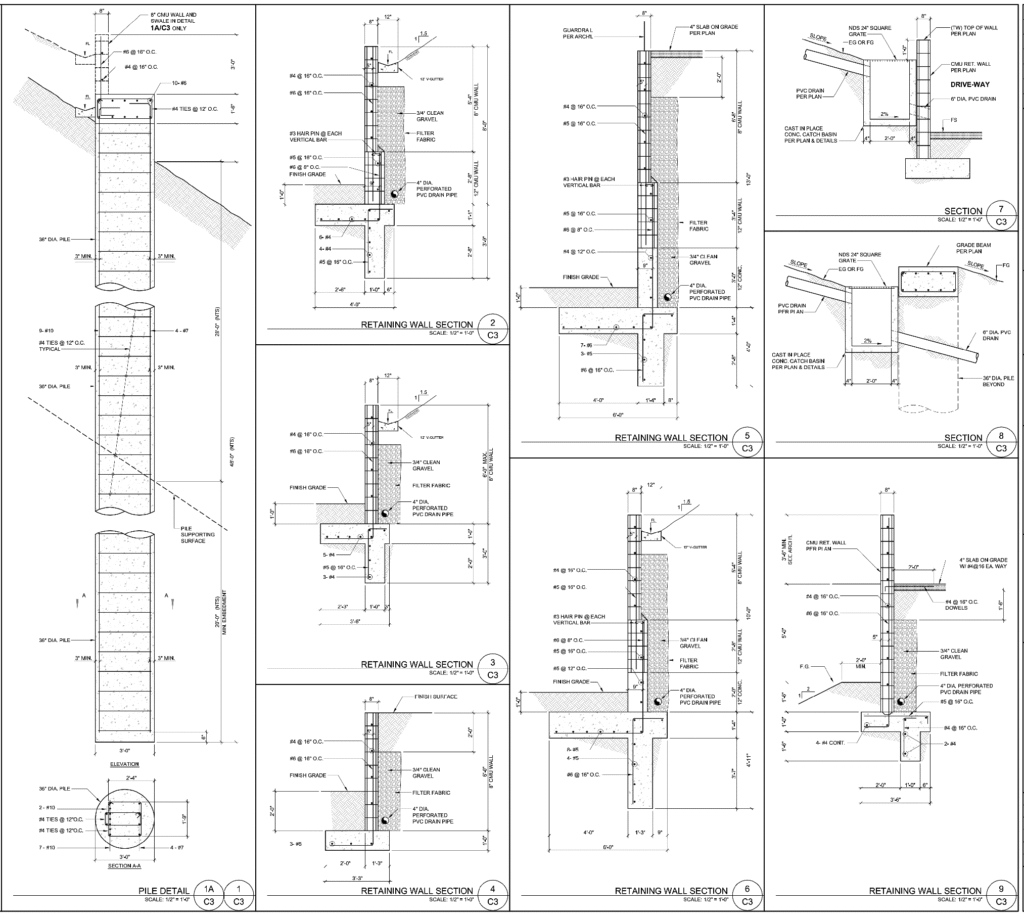
Most hillside homes in Southern California require deep foundation systems. Caissons or drilled piers extend down to competent bearing material or bedrock, sometimes reaching depths of 50 feet or more. These concrete columns become the anchor points that resist the enormous loads trying to pull the structure down the slope.
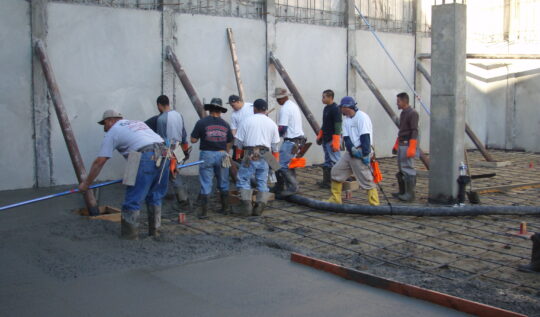
The process of installing caissons on a hillside is exacting work that requires precision at every step. The drilling equipment must be precisely positioned, sometimes on steep, uneven terrain utilizing an even more specialized drill. In some soil conditions caving can become an issue and the hole must be kept stable during drilling, which can be challenging. This is done with specialized tools such as casing which protect the walls of the shaft and stabilize the hole until concrete is poured. The reinforcing steel cage must be fabricated and tied correctly. And the concrete pour must be continuous and properly consolidated to avoid weak spots. Each of these steps looks straightforward on paper, but executing them correctly requires both technical knowledge and field experience.
Grade beams connect the caissons and distribute the building loads. On hillside sites, these beams often span across varying elevations and must be engineered to handle both vertical loads and lateral forces. The formwork for these elevated grade beams is complex, and the concrete work must be executed with precision to ensure proper structural performance.
Shoring and Excavation on Slopes
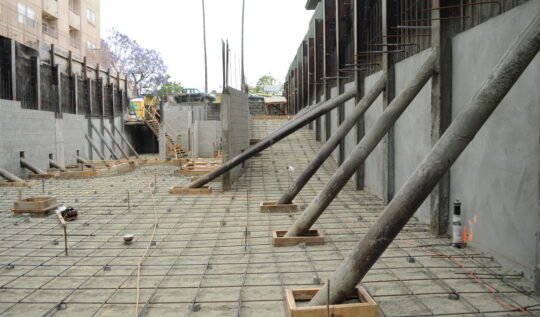
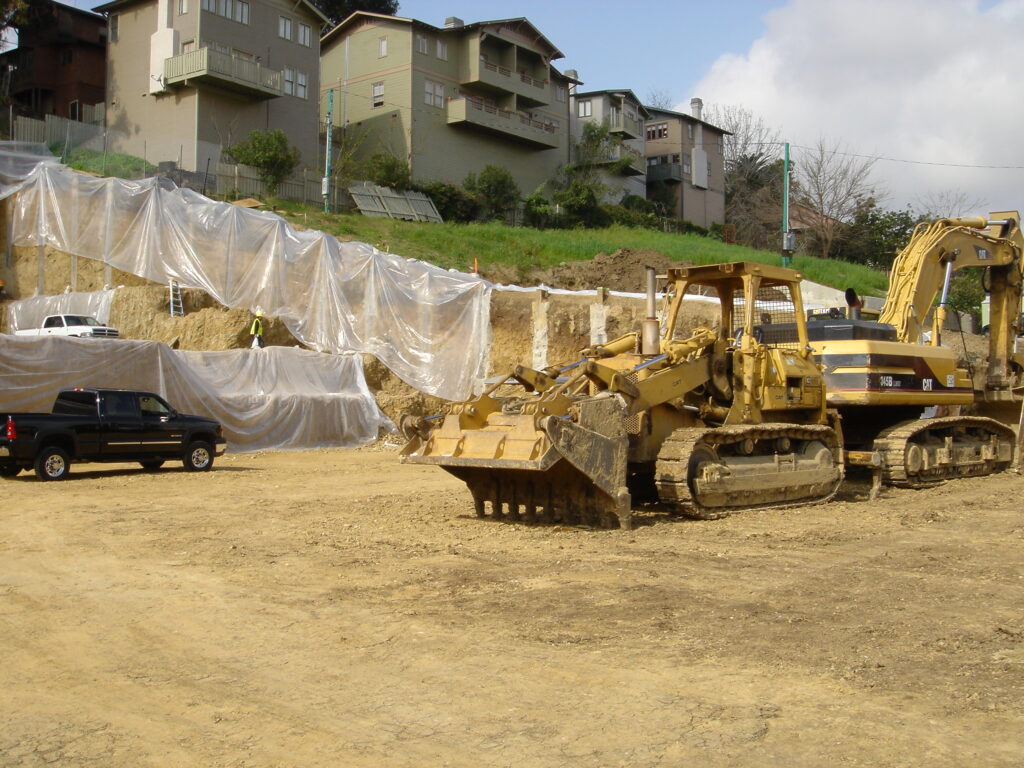
Before you can even begin foundation work on many hillside sites, you need to create a safe, stable work area. This often means temporary or permanent shoring systems to support the existing slope during construction.
Shoring design and installation is specialized work. Soldier piles, tiebacks, soil nail walls, shotcrete slopes—each system has its applications and limitations. The choice depends on soil conditions, site geometry, property line constraints, and the permanent retaining systems that will be part of the finished project.
Inadequate experience with this type of work can have catastrophic consequences. Hiring an inexperienced contractor for this type of complex work can become a gamble with horrible odds. Southern California soils can be deceptive. What looks stable when dry can become unstable when saturated. What appears competent during summer can fail during winter rains.
Proper shoring isn’t just about safety during construction, though that’s obviously paramount. It’s also about protecting adjacent properties, maintaining the integrity of the building site, and ensuring that the permanent structure will perform as designed. Shortcuts in shoring often create problems that don’t appear until later, sometimes years later, when soil movement affects the foundation or structure.
Water Management: The Invisible Enemy
Water is the most destructive force acting on hillside foundations. Groundwater, surface runoff, and even water from landscape irrigation can undermine foundation performance if not properly managed.
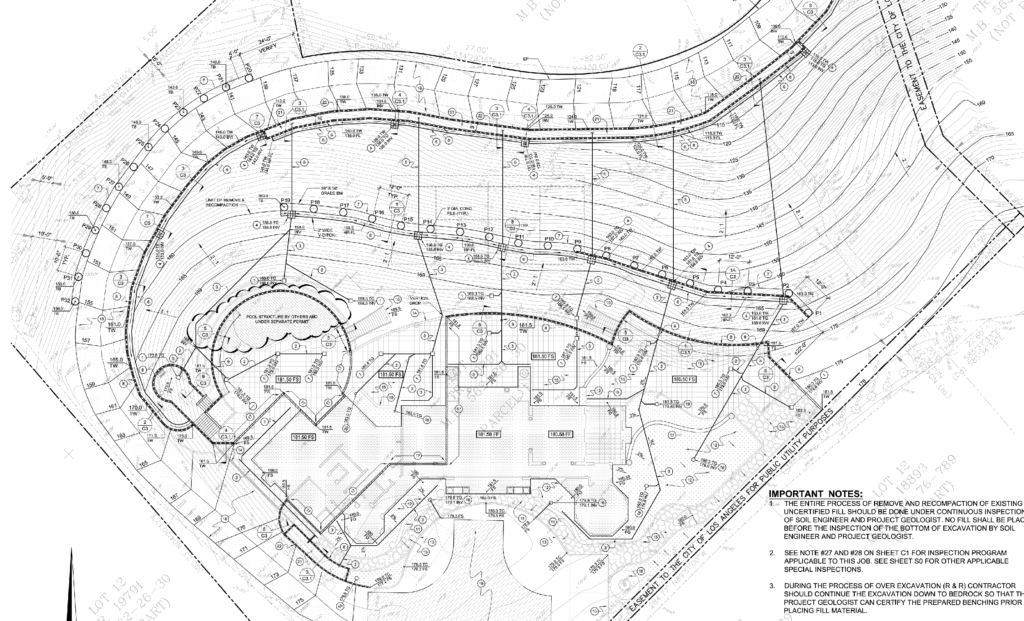
Effective water management on hillside sites requires a comprehensive approach. This includes subdrainage systems behind retaining walls, perimeter drains around the foundation, weep holes, properly designed downspout systems, and grading that directs water away from the structure. In some cases, it means intercepting groundwater before it reaches the building pad.
The drainage systems installed during foundation work are mostly invisible once the project is complete, which makes them easy to undervalue. But inadequate drainage is one of the most common causes of foundation problems in hillside homes. Hydrostatic pressure builds up behind retaining walls. Soil becomes saturated and loses bearing capacity. Slopes become unstable.
An experienced hillside contractor understands that the drainage system is as critical as the foundation itself. In our role we execute these designs in collaboration with the design team to ensure proper drainage of the site.
Coordination: Where Experience Shows Its Value
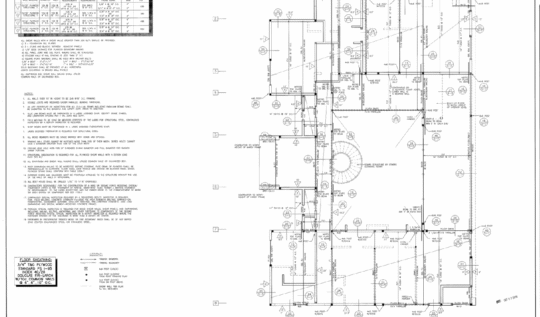
Hillside construction requires exceptional coordination among multiple engineering disciplines, trades, and jurisdictions. The contractor, structural engineer, geotechnical engineer, civil engineer, and surveyor must all be working from the same understanding of site conditions and design intent.
Building departments in hillside communities have seen enough problems to be appropriately cautious about sloped site construction. Inspections are thorough, and inspectors know what to look for. If your foundation work doesn’t demonstrate proper execution and adherence to the approved plans, you’ll face delays and potentially expensive corrections.
Only experience can teach how to properly coordinate the many different moving parts of this type of construction. From the coordination with the design team to all aspects of the build and execution of the work by the field crews, the most successful projects have had a contractor at the helm whose knowledge has been based on the experience it has gained in constructing hillside projects.
What to Look for in a Hillside Contractor
When selecting a contractor for a hillside project, you’re not just hiring someone to manage construction. You’re hiring specialized expertise that will determine whether your home is built on solid ground or on a foundation of compromises and corrections.
Look for contractors who have the track record of successful hillside construction projects, not generalists who occasionally take on a slope job. Ask about their specific experience with deep foundations, shoring systems, and challenging soil conditions. Request references from hillside projects, and take the time to speak with previous clients about how the foundation work was executed.
Pay attention to how the contractor talks about the engineering and coordination aspects of the project. Do they demonstrate understanding of soil mechanics and foundation design principles? Do they have established relationships with geotechnical engineers? Can they explain their approach to drainage and water management?
And perhaps most tellingly, ask about projects that encountered unexpected conditions. Every hillside site presents surprises. How a contractor handles these situations—with engineering expertise, problem-solving ability, and transparent communication—reveals their true level of experience.
The Triton Approach
At Triton Engineering Contractors, hillside foundations aren’t just part of what we do. They’re at the core of our expertise. With nearly three decades of self-performing subterranean concrete structures and shoring experience, having tackled many hillside projects in some of Southern California’s most demanding sites, we have learned that good foundation work is where projects are won or lost.
We approach every hillside project with the understanding that what happens below grade determines everything that follows. We maintain close collaboration with geotechnical and structural engineers throughout this phase. We approach challenges with problem-solving expertise developed over decades of navigating complex hillside conditions. When unexpected situations arise, we work collaboratively with our specialized subcontractors and the engineering team to find solutions that keep the project on track.
And when unexpected conditions arise—because they always do on hillside sites—we have the experience and the engineering relationships to adjust the approach while maintaining the momentum the project requires.
Building on a hillside offers extraordinary opportunities for luxury living. But those opportunities can only be realized when the foundation work is executed by contractors who truly understand the complexities involved. Experience isn’t just valuable in hillside construction. It’s essential.
If you’re planning a hillside home in Los Angeles County, Ventura County, Santa Barbara, or Orange County, we invite you to discuss your project with our team. We’ll provide straightforward guidance about what your site requires and can help connect you with experienced architects, engineers, and consultants from our network of trusted design professionals. Our experience can help you achieve your vision and bring your dreams to life.
Triton Engineering Contractors, Inc. specializes in luxury custom home construction, with particular expertise in challenging hillside projects, deep foundations, and subterranean concrete work throughout Southern California. Contact us to discuss your hillside home project.