The Art of the Finish: How Premium Interior Surfaces Define a Custom Home
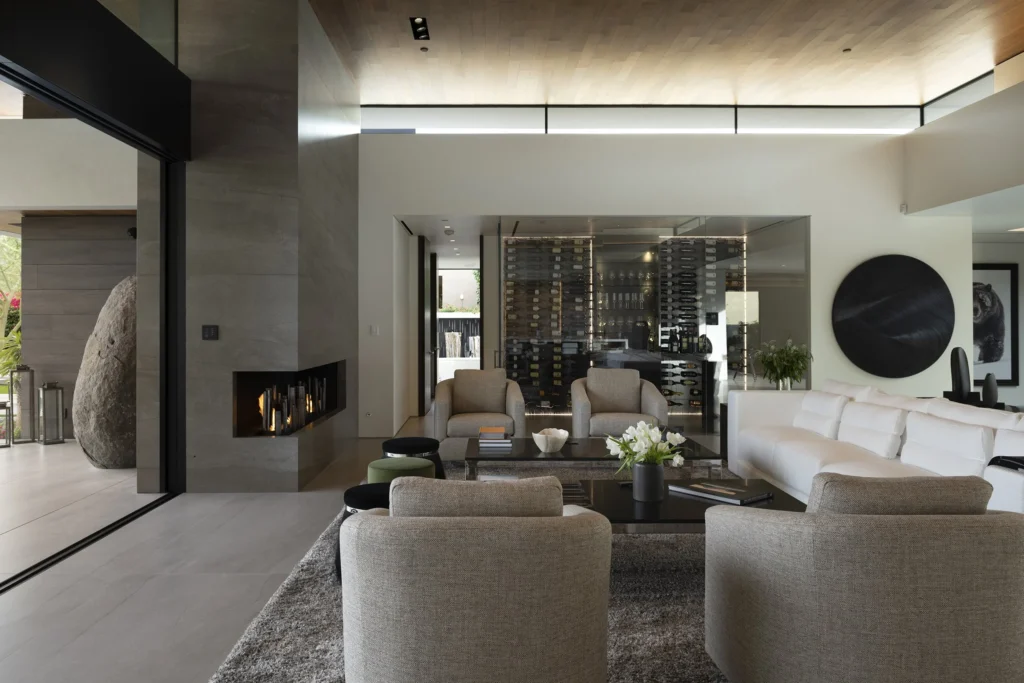
When you build a custom home in Southern California, the structure is only the beginning. Foundations, framing, and systems give your home its bones — but it’s the finishes that give it a soul. The surfaces you live with every day, the ones you touch, walk across, and see in every angle of light, are what transform a well-built house into a home that feels unmistakably yours.
At Triton, we’ve spent years building custom homes with character and soul, utilizing skills gained from our commercial construction experience, which helped immensely in the complexities of building these beautiful pieces of art. Whether in La Cañada Flintridge, Bradbury, Bel Air, or Malibu, we’ve come to realize that the intricacies of these challenging builds lie in the foundation of knowledge and desire to execute exceptional designs.
Builder-Grade vs. Luxury Finishes: What’s Actually Different?
The phrase “builder-grade” has become almost synonymous with “good enough.” And for production homes, it is. These materials are designed to be durable, consistent, and cost-effective across dozens of identical units.
Custom home finishes operate in an entirely different world.
Luxury finishes aren’t just more expensive versions of the same thing. They’re sourced differently, installed differently, and they behave differently over decades of use. They develop character over time rather than simply wearing out. A honed Calacatta marble slab, a hand-applied Venetian plaster wall, or a wide-plank white oak floor doesn’t look worse as it ages — it tells a story.
The difference is also in exclusivity. A luxury finish selection is often unique to your home. Slab stone is quarried in individual lots — no two slabs are ever truly identical. Artisan plaster is mixed and applied by hand — no two rooms will ever look exactly alike. That specificity, that irreproducible quality, is exactly what defines a custom home.
Surfaces That Define a Space
Natural Stone
Few materials carry the presence of natural stone. Marble, quartzite, limestone, travertine, and onyx each bring something distinct — and each behaves differently in different settings.
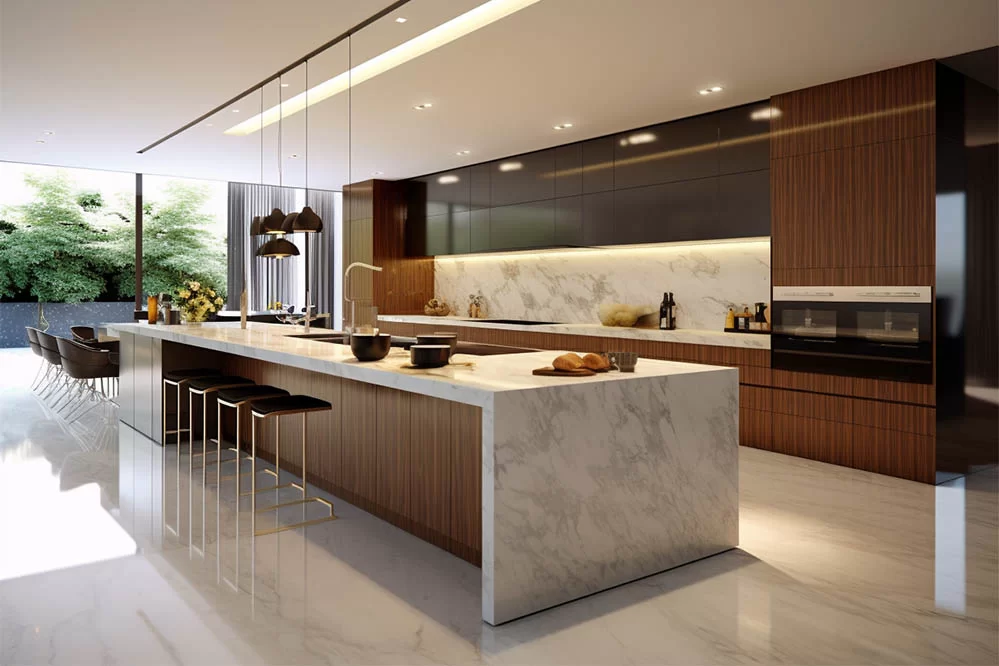
Marble is the classic luxury choice. It’s visually striking, cool to the touch, and develops a beautiful patina over time. Marble is best suited for lower-traffic areas, feature walls, fireplace surrounds, and master bathroom applications where its elegance can be fully appreciated with appropriate care.
Quartzite is often mistaken for marble but is a dramatically harder and more durable natural stone. It’s an exceptional choice for kitchen countertops, outdoor-facing applications, and high-traffic flooring where you want the look of marble with significantly greater resilience.
Limestone and travertine deliver a warmer, earthier aesthetic that pairs beautifully with the natural surroundings of many Southern California hillside and canyon properties. Their softer tones integrate seamlessly with indoor-outdoor living spaces and organic design languages.
The key to working with stone at a luxury level is slab selection. Walking a slab yard and personally selecting your stone — matching book-matched pairs for feature walls, choosing the exact movement in a countertop slab — is an experience that no showroom sample or digital image can replicate. It’s one of the moments that makes custom building feel truly personal.
Hand-Applied Plaster Walls
Wall finishes are often underappreciated in the custom home conversation, yet they have an enormous impact on how a space feels.
Painted drywall, even beautifully painted, has a flatness to it. Hand-applied plaster — Venetian plaster, limewash, American clay, or tadelakt — has depth. Light interacts with it differently at different times of day, in different seasons, from different angles. A plastered wall is alive in a way that painted drywall simply isn’t.
Beyond the aesthetic, hand-applied plasters offer practical advantages. Many are naturally breathable, vapor-permeable, and antimicrobial. Limewash and clay plasters are among the most sustainable interior finish options available. And unlike painted surfaces, minor touch-ups and repairs often blend invisibly rather than leaving visible patches.
For Southern California homes where indoor-outdoor integration is paramount, these finishes bridge the gap beautifully between the natural exterior landscape and the refined interior.
Wide-Plank Hardwood Flooring
Flooring covers more surface area than almost any other single finish in the home, which means it has an outsized effect on how every room feels.
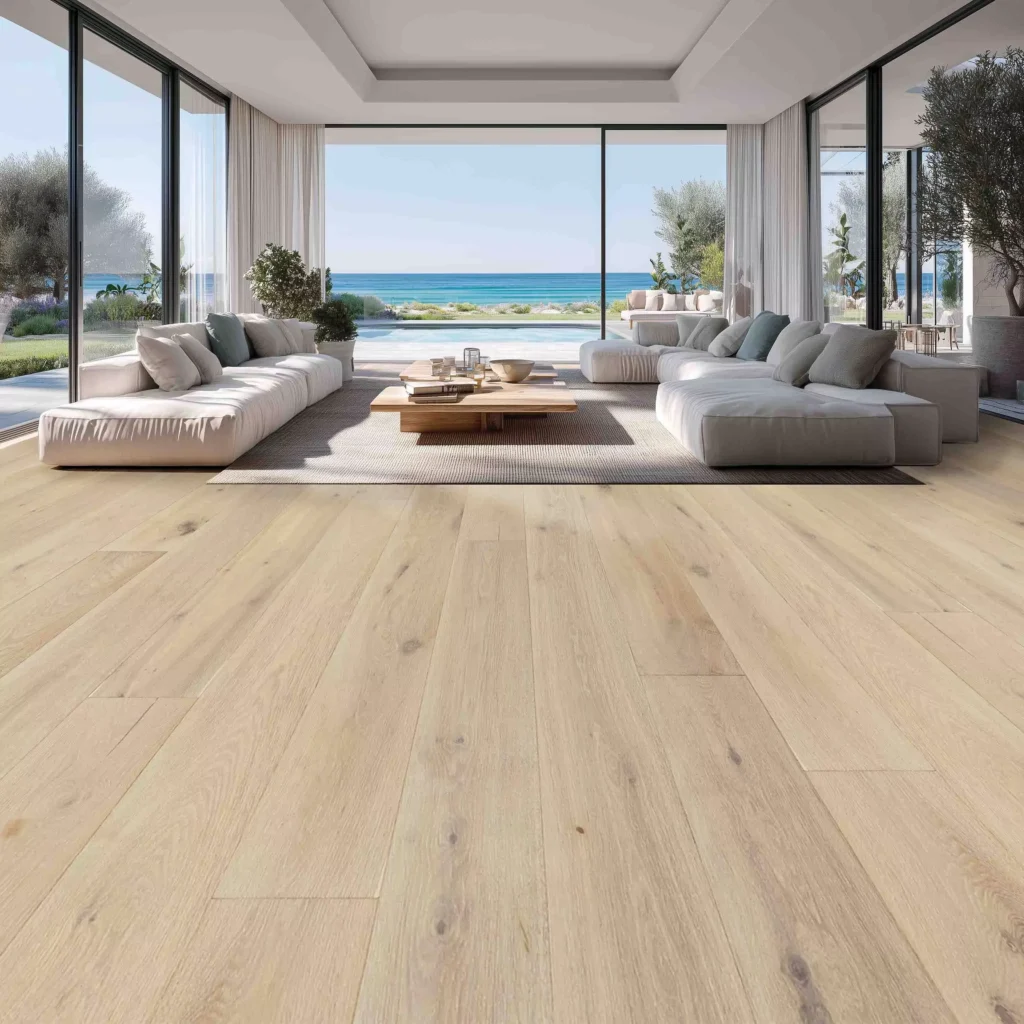
Wide-plank hardwood — planks typically 5 inches wide or broader — delivers a sense of scale and openness that standard strip flooring can’t match. With fewer seams interrupting the floor plane, spaces feel larger and more continuous. The natural grain variation across a wide plank becomes a design feature rather than something to minimize.
Species selection matters enormously. White oak, with its tight, even grain and warm grey undertones, has become the defining floor of contemporary luxury homes and pairs seamlessly with Southern California’s neutral, organic design palettes. Walnut brings richness and warmth to more traditional or transitional interiors. Reclaimed wood introduces history, texture, and irreproducible character.
How the wood is finished matters just as much as species. Hardwax oil and wire-brushed finishes offer a matte, natural feel underfoot and age gracefully. Traditional polyurethane brings durability but less warmth. The finish treatment is the final decision that brings the whole floor to life.
Architectural Millwork: The Detail That Signals Quality
In luxury custom homes, millwork — cabinetry, built-ins, doors, window casings, crown molding, and paneling — is often where the real character of the home is expressed.
Custom millwork means that every cabinet, shelf, panel, and door is designed specifically for your home, your dimensions, your lifestyle. There’s no compromising for a standard width or accepting a color that’s “close enough.” Proportions are drawn to the architecture, materials are selected to complement the stone and floor, and hardware is chosen as a final punctuation mark.
The transition from a home with production millwork to one with true custom millwork is one of the most immediately noticeable jumps in quality. It’s what gives a kitchen or library the feeling that it was always meant to be exactly there.
The Builder’s Role in the Finish Conversation
A well-run custom home project relies on the expertise of the builder and designer working in a collaborative environment to bring creativity to life. With the designer’s eye for great finishes and their relationship with one another, the stage is set for the construction team to build these creations and bring the client’s desires to life.
During pre-construction services, we work closely with the design and architectural team to evaluate how the specified finishes will be built. Questions around substrate requirements, weight loads, sequencing, and coordination between trades are all addressed at this stage, before they can affect the schedule or the finished result. It’s a collaborative process that ensures the beautiful selections made by the designer translate seamlessly from specification to reality.
This is the kind of integrated, detail-oriented approach that distinguishes a smooth custom build from one that encounters avoidable surprises. When the builder is brought into the conversation early, the entire team — client, designer, architect, and contractor — moves forward with confidence.
Working With Your Design Team
Some of our clients come to us with a designer or architect already engaged, or bring one in early in the process. That collaboration is something we genuinely welcome. The best custom homes are built when the builder, architect, and design team are working as partners from day one — not in sequence.
When finish selections are made in close coordination with the structural and construction planning, everything integrates more smoothly. Substrate requirements are built in from the start. Material lead times are incorporated into the schedule. Budget is allocated with full awareness of the installation complexity involved.
The result is a home where everything feels intentional — because it was.
Start With the Vision
If you’re beginning to plan a custom home in Southern California, the finish conversation is one worth having early. Not to lock in every detail before design begins, but to develop a shared language around what the home should feel like — and to make sure the structure being built can support that vision at the highest level.
Triton Engineering Contractors specializes in luxury custom home construction throughout Los Angeles, Ventura, Santa Barbara, and Orange County. We bring technical depth and genuine care to every phase of the process, from deep foundations to the surfaces you’ll live with every day.
Contact us to talk about your project — we’d love to hear what you’re envisioning.
Triton Engineering Contrachttps://tritoneci.com/projectstors, Inc. has been building custom homes and commercial projects across Southern California since 2011. Learn more about our approach to luxury custom home construction or explore our work in hillside and complex site projects.