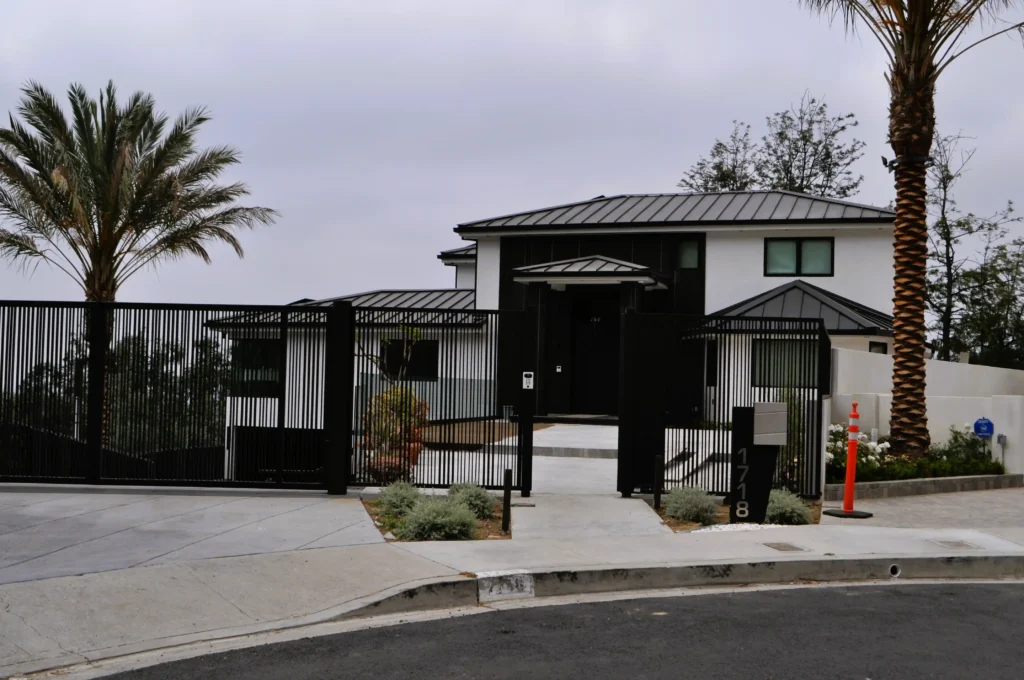
There’s something undeniably appealing about hillside properties in Southern California. The sweeping views from Malibu to the Hollywood Hills, the sense of privacy and elevation, the way a well-designed hillside home seems to float above the landscape—it’s no wonder these lots command premium prices and inspire architectural dreams.
But if you’re considering building a custom home on a hillside lot, you’re also taking on one of the most complex construction challenges in residential building. After nearly three decades of building on some of Southern California’s most challenging terrain, we can tell you that hillside construction is where engineering meets artistry, where careful planning becomes absolutely critical, and where the difference between a mediocre builder and an experienced one becomes painfully apparent.
This isn’t meant to discourage you. Hillside homes offer extraordinary opportunities for creative design and spectacular results. But they demand respect for the unique challenges involved and realistic expectations about timelines, costs, and the level of expertise required.
Why Hillside Lots Are Different
Let’s start with the obvious: gravity exists, and it’s particularly relevant when you’re building on a slope.
Unlike a flat lot where the ground provides stable, uniform support, hillside construction means you’re working with variable soil conditions, potential instability, and forces that want to pull everything downward. You’re not just building a house—you’re engineering a structure that must resist lateral earth pressure, potential soil movement, seismic forces amplified by elevation, and water flow patterns that change dramatically with topography.
Every hillside lot is unique. The geology beneath one property on Mulholland Drive might be completely different from the lot next door. Slope angles, soil composition, groundwater presence, existing vegetation, sun exposure, prevailing winds, and access challenges all combine to create a distinct set of conditions that require customized engineering solutions.
This is why cookie-cutter approaches don’t work on hillside sites. What succeeded on your neighbor’s property might be completely inappropriate for yours.
The Foundation Story: Going Deep
On a flat lot, foundation work is relatively straightforward. On a hillside, it becomes one of the most critical—and expensive—aspects of your project.
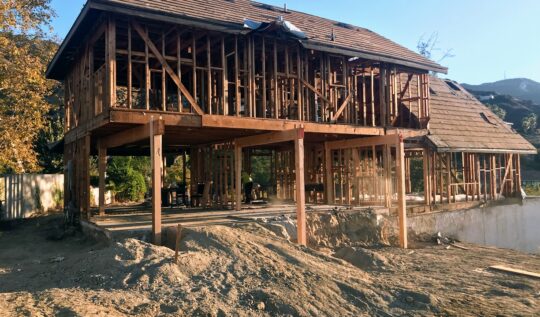
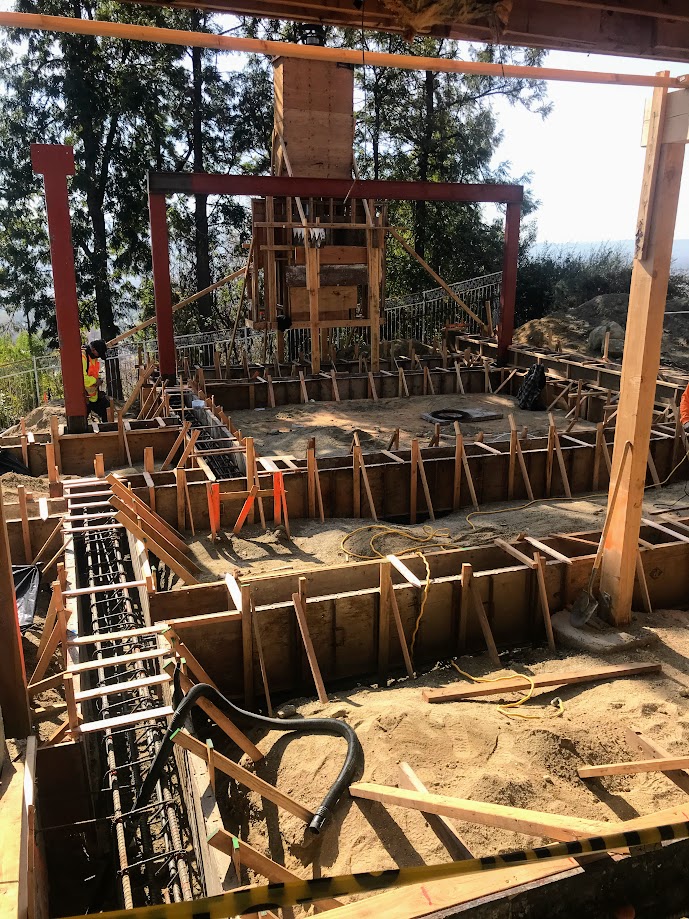
Most hillside homes in Southern California require deep foundation systems. We’re talking about caissons or piles that can extend 20, 30, even 50 feet or more into the earth to reach stable bearing material. These aren’t the simple concrete footings you’d see in flat lot construction. These are engineered deep foundations, often two to three feet in diameter, reinforced with heavy steel cages, and carefully located based on detailed geotechnical analysis.
The reason is simple: surface soils on hillsides are often unstable or subject to movement. To build something permanent, you need to anchor into stable material deeper down—often into bedrock itself. This requires specialized equipment, experienced crews, and precise engineering calculations that account for both vertical and lateral loads.
Foundation work on hillsides also frequently requires shoring and tiebacks—temporary and sometimes permanent systems that hold back the earth while you’re constructing. Picture massive steel beams anchored deep into the slope, allowing you to create a safe working platform and protect neighboring properties from any soil movement.
Soil Conditions and Geotechnical Reality
A comprehensive geotechnical investigation isn’t optional—it’s the foundation (pun intended) of everything that follows. This means hiring a licensed geotechnical engineer to drill borings, analyze soil samples, test bearing capacity, evaluate groundwater conditions, assess landslide risk, and provide specific recommendations for foundation design and site grading.
Southern California’s geology is notoriously variable. You might encounter stable bedrock at shallow depths, or you might find deep deposits of expansive clay soils that swell and shrink with moisture changes. You could have ancient landslide debris requiring massive stabilization work, or relatively stable alluvial materials that just need proper compaction.
Some hillside lots have groundwater springs or perched water tables that require permanent drainage systems. Others sit on geological faults or in areas with high liquefaction potential during earthquakes. These aren’t deal-breakers necessarily, but they dramatically affect design requirements and construction costs.
The geotechnical report will dictate much of what follows: foundation type and depth, grading approaches, retaining wall requirements, drainage systems, and seismic design criteria. Trying to save money by skipping or skimping on geotechnical investigation is false economy—you’ll pay for it many times over in redesigns, delays, or worse, structural problems after construction.
The Regulatory Gauntlet
If you think building permit approval is straightforward for hillside properties, prepare for an education.
Hillside construction in Southern California falls under intense regulatory scrutiny, and for good reason. The region’s history includes tragic hillside failures, landslides, and erosion events that have shaped increasingly strict building codes and planning requirements.
In Los Angeles and surrounding areas, for example, hillside properties often fall under special ordinances like the Baseline Hillside Ordinance, which uses slope percentage calculations to determine allowable building square footage, requires special design review, mandates specific setbacks, and imposes strict height limits measured from natural grade. Many municipalities have specific hillside overlay zones with additional requirements.
The review process can be very challenging which is why the right team is important. Plan checks often come back with extensive comments requiring revisions. Engineers need to respond to reviewer questions, sometimes requiring additional analysis.
Environmental review under CEQA (California Environmental Quality Act) may also apply, particularly for larger projects or those in sensitive areas. This can add additional layers of complexity to the approval process.
Working with experienced professionals who understand local hillside regulations isn’t just helpful—it’s essential to navigating this process without endless delays and frustration.
Grading and Site Work: Moving Mountains
Hillside construction almost always requires significant grading work to create buildable pads, access roads, and proper drainage.
This isn’t simply pushing dirt around. It’s carefully engineered cut-and-fill operations where soil is excavated from one area (cut) and compacted in another (fill) to create level building pads and transition zones. Every lift of fill material must be properly compacted and tested to ensure it will support structural loads. Retaining walls are often needed to hold back earth and create usable space.
Access requires thoughtful planning and creative problem-solving. How will concrete trucks, cranes, excavators, and material deliveries reach your site? Steep lots often require innovative approaches to getting materials on site—whether through carefully designed temporary access roads, strategic equipment placement, or phased delivery methods that work with the terrain rather than fighting it. Experienced teams know how to develop practical solutions for even the most challenging access situations.
Drainage becomes critical on hillside sites. You’re not just managing rainwater falling on your property—you’re dealing with runoff from uphill neighbors and ensuring you don’t send erosive flows onto properties below you. This requires careful design of surface drainage, subsurface drains, and sometimes elaborate systems of interceptor drains and underground pipes.
During construction, erosion control is mandatory. This means silt fences, fiber rolls, hydroseeding, and sometimes elaborate temporary drainage systems to prevent sediment from washing off your site during rain events.
Design Opportunities: Making the Most of Elevation
Now for the exciting part: hillside sites offer design opportunities that simply don’t exist on flat lots.
The most obvious is views. A well-designed hillside home maximizes sight lines through strategic window placement, outdoor deck locations, and room orientation. You might have panoramic ocean views, city light vistas, or mountain scenery that becomes part of your daily living experience.
Multi-level designs work naturally on hillsides, creating interesting spatial relationships and architectural character. You can tuck garages and utility spaces into the hillside at lower levels, place main living areas to capture views at mid-levels, and reserve upper floors for private bedroom suites.
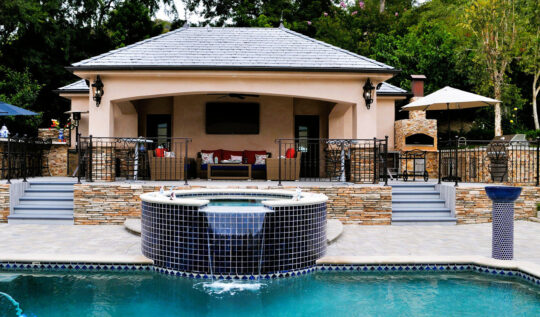
Outdoor spaces become three-dimensional. Terraced gardens, multiple deck levels, and cascading water features work with the natural topography rather than fighting it. Infinity pools seem to dissolve into the landscape below. Rooftop gardens and terraces create usable space even on steep sites.
Natural ventilation and passive cooling often work better on hillside properties. Prevailing breezes, stack effect ventilation, and elevation can reduce cooling costs compared to homes in flat valley locations.
The relationship between indoor and outdoor spaces becomes more dynamic. Floor-to-ceiling glass walls can open living areas to dramatic outdoor rooms without sacrificing privacy, since you’re elevated above neighboring properties.
Great hillside architecture embraces the site’s challenges and transforms them into design assets. The key is working with the right teams that can execute these challenges to bring your vision to life.
Choosing the Right Team
The single most important decision you’ll make is who builds your hillside home.
Hillside construction isn’t something every contractor does well or should even attempt. It requires specific expertise in deep foundations, shoring systems, complex grading, structural engineering coordination, and specialized construction techniques. Experience matters enormously.
Look for contractors with a proven track record of hillside projects specifically. Ask to see previous hillside homes they’ve built. Talk to past clients about their experience. Were there surprises? How were challenges handled? Did the project finish on time and on budget?
The same applies to your design team. Architects who specialize in hillside homes understand how to work with topography, maximize views while maintaining structural integrity, and design systems that account for the unique demands of sloped sites.
Your geotechnical engineer needs to be local and experienced with the specific geology of your area. Southern California’s geological diversity means expertise in Malibu might not translate to the Hollywood Hills or Palos Verdes.
This isn’t the time to choose based on the lowest bid. The cheapest contractor or engineer is often the most expensive in the long run when mistakes, delays, and corrections pile up.
Is Hillside Construction Right for You?
If you’re drawn to the dramatic possibilities of hillside living—the views, the privacy, the architectural opportunities, the unique character of homes that work with nature—you’re considering one of Southern California’s most rewarding building experiences.
Working with experienced professionals who understand hillside construction transforms complexity into opportunity. The right team brings the expertise to navigate the technical challenges while keeping your vision at the forefront.
When done right, a hillside home becomes more than just a house with a view. It becomes a carefully engineered piece of architecture that respects the land it sits on, maximizes the natural advantages of elevation, and creates a living environment that simply can’t be replicated on flat ground.
This is the reward of hillside construction—creating something truly special that captures the essence of Southern California’s most distinctive residential architecture. The dramatic settings, the architectural possibilities, and the end result make hillside homes some of the most sought-after properties in the region.
Thinking about building on a hillside lot? The complexity can be overwhelming, but that’s exactly why experience matters. At Triton Engineering Contractors, we’ve spent decades mastering the unique challenges of hillside construction across Southern California. We’re not here to sell you on every project—we’re here to help you understand what you’re taking on and whether it makes sense for your situation. Sometimes the best advice is honest guidance about what’s really involved.