Meta Title: Wildfire-Resilient & Beautiful: SoCal Custom Homes Meta Description: Discover how Southern California homeowners are building wildfire-resilient custom homes without compromising on beauty — materials, design, and expert construction guidance.
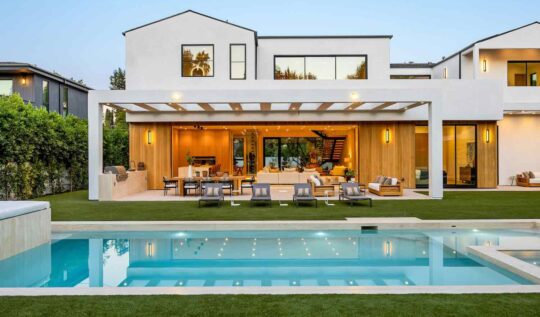
There was a time when “fire-resistant” felt like a concession — a compromise made at the expense of warmth, character, and the refined aesthetic that defines a truly exceptional home. That time has passed. Today, the most sophisticated custom homes being built across Southern California’s most desirable communities are proving that resilience and beauty are not competing values. They are, when the right builder is involved, the same conversation.
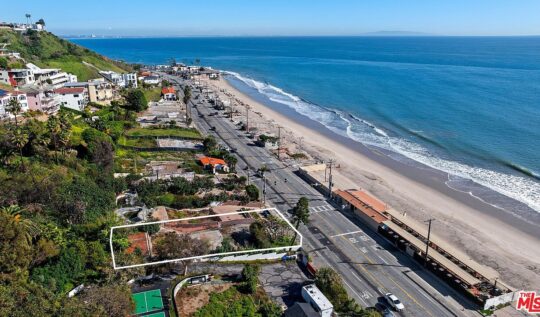
For homeowners in neighborhoods like Malibu, Pacific Palisades, Hollywood Hills, La Cañada Flintridge, and Brentwood — communities where fire risk is a lived reality, not an abstraction — this shift has been both urgent and inspiring. The question is no longer whether to build with fire resilience in mind. The question is how to do it with the kind of intentionality and craft that makes a home genuinely extraordinary.
The Materials Conversation Has Changed
The materials available to custom home builders today bear little resemblance to what was on the market even fifteen years ago. Fire-resistant cladding once meant a limited palette of utilitarian options. Now, the selection is as diverse as it is beautiful — and in many cases, the performance characteristics that make a material fire-resistant are the same ones that give it longevity, texture, and visual depth.
Fiber cement cladding, for example, has become a staple of contemporary luxury construction throughout Southern California. Products in this category offer a non-combustible profile that satisfies even the most stringent fire zone requirements, while delivering clean lines and a surface quality that holds paint and finishes beautifully over time. In neighborhoods like Pacific Palisades and La Cañada Flintridge, where the intersection of design ambition and environmental exposure is most acute, fiber cement has found a natural home.
Natural stone and stone veneer occupy a different register — one that speaks to permanence, weight, and a kind of geological authority that no synthetic material can replicate. Stone is inherently non-combustible, and its thermal mass means it responds slowly to heat, making it one of the most naturally fire-resistant cladding options available. For estates in San Marino, Arcadia, or Pasadena where architectural tradition runs deep, stone doesn’t feel like a concession to safety. It feels like exactly what the home was always meant to wear.
Steel and metal cladding have increasingly found their way into high-design custom builds, particularly in contemporary and transitional homes throughout the Hollywood Hills and Bel Air. When properly detailed, metal cladding is non-combustible, dimensionally stable, and deeply expressive — capable of reading as warm or cool, industrial or refined, depending on finish, profile, and context. Its durability over the decades makes it an investment that compounds in value.
Roofing: Where Resilience Is Most Visible
If the roof is the crown of a home architecturally, it is also the first line of defense in a wildfire scenario. Class A fire-rated roofing materials — the highest designation available — include clay tile, concrete tile, and certain metal roofing systems, all of which have long been synonymous with luxury residential construction in Southern California.
Clay tile, in particular, carries centuries of precedent. Its fire resistance is intrinsic to the material — clay is fired ceramic, and it simply does not combust. For Spanish Colonial, Mediterranean, and transitional homes from Montecito to Pasadena, a clay tile roof is as architecturally correct as it is resilient. Concrete tile offers similar fire performance with a broader range of profile options, lending itself to more contemporary interpretations. Metal roofing, installed as standing seam or architectural shingle, rounds out the Class A palette with a profile that reads beautifully on modern and contemporary designs.
What matters as much as the material itself is the installation — the underlayment, the detailing at ridges, hips, and valleys, and the continuity between the roofing assembly and the wall cladding below it. This is where the experience of the builder becomes decisive. A roof that performs in a fire scenario is one where every transition has been thought through and executed with precision.
Glazing: Expansive Views Without Vulnerability
One of the most remarkable developments in fire-resilient construction has been the evolution of glazing systems. Southern California homeowners — particularly those building in hillside communities with sweeping views — have historically faced a tension between the desire for expansive glass and the vulnerability that large glazing can represent in a fire-wind event.
Tempered glass, multi-pane assemblies, and fire-rated glazing systems have effectively dissolved that tension. Tempered glass is dramatically more resistant to thermal shock and radiant heat than standard glass, and when used in multi-pane configurations with appropriate framing systems, it provides a level of performance that makes large-format glazing viable even in high fire hazard severity zones. Some premium glazing manufacturers now offer products specifically tested and rated for fire exposure — a designation that would have seemed exotic a decade ago and is now increasingly specified in high-end custom builds.
The framing systems matter as much as the glass itself. Aluminum, steel, and composite framing profiles offer non-combustible performance while delivering the slim sightlines and refined aesthetic that luxury clients rightly expect. The days of accepting clunky frames as the price of fire safety are long behind us.
Wood, Used with Intention
A thoughtful approach to fire-resilient construction does not mean eliminating wood from the palette. Wood is beautiful — it carries warmth, natural variation, and a tactile quality that no manufactured material fully replicates. The question is where and how it is deployed.
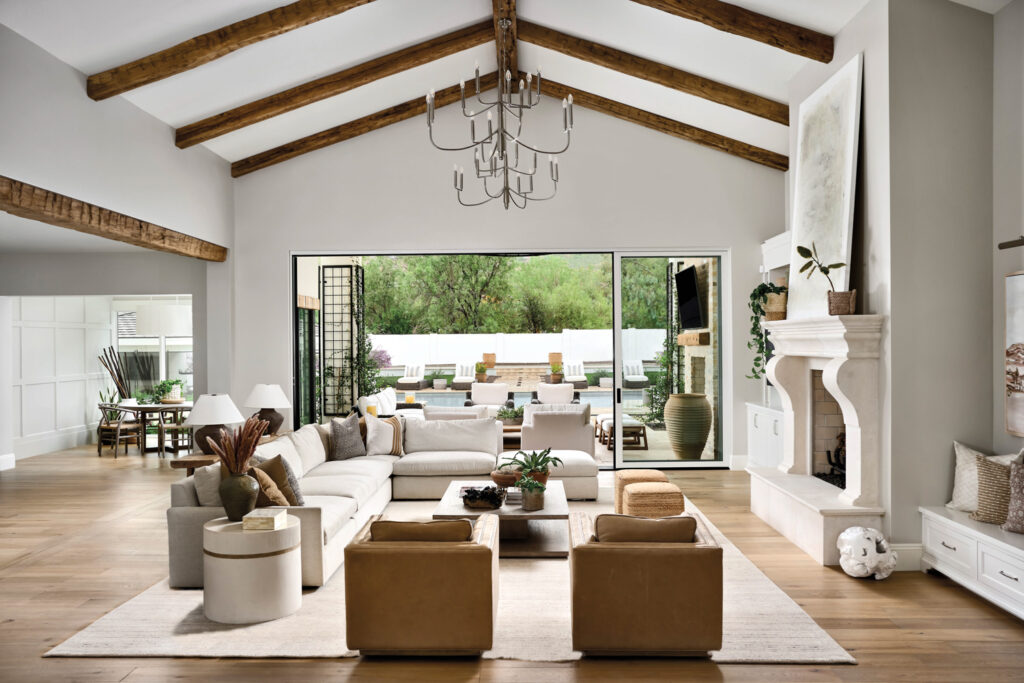
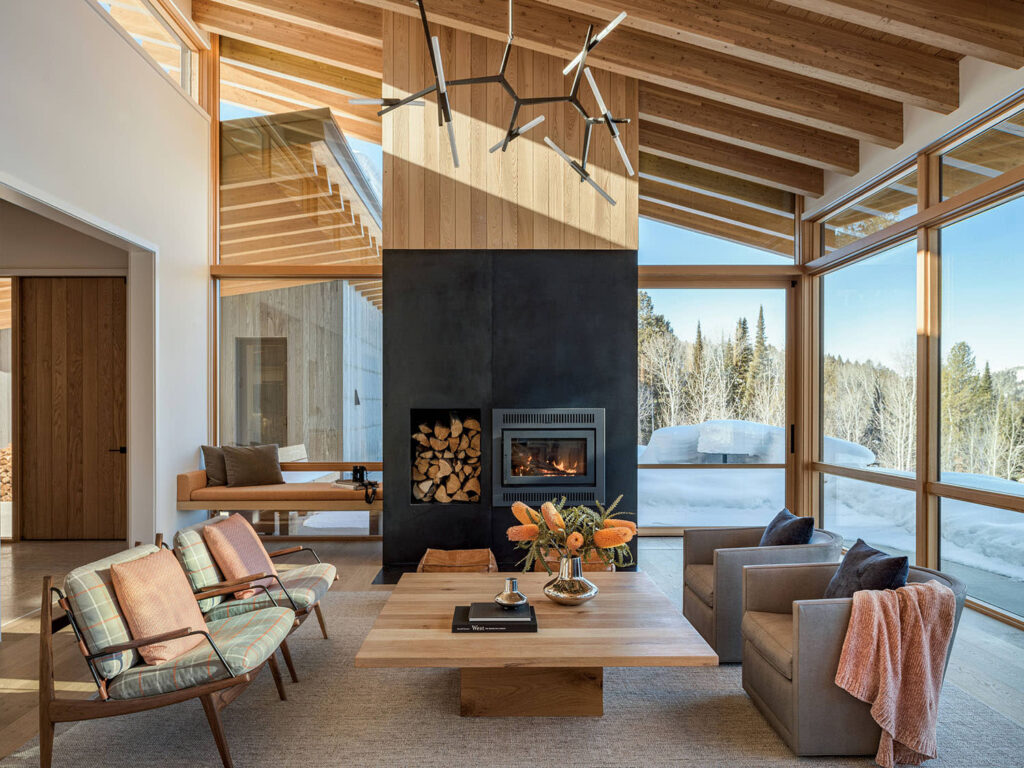
In interior applications, wood remains as expressive and relevant as ever. Exposed beams, white oak flooring, richly grained millwork, and paneled feature walls are as at home in a fire-resilient custom build as in any other. The conversation about fire performance is primarily an exterior one, and even there, wood is not universally excluded.
In protected locations — covered outdoor rooms, deep eaves that are properly enclosed and detailed, interior-facing accent elements — wood can be used with confidence when the builder understands the exposure conditions. Certain wood species also perform meaningfully better than others under heat exposure. The key is intentionality: knowing exactly where a material is going, what it will face, and how the surrounding assembly protects it. This is precisely the kind of nuanced judgment that separates an experienced custom builder from one who is simply following a checklist.
Composite decking materials have expanded dramatically in quality and visual range, and many of our clients who initially resisted them have been genuinely surprised by what is available — products that capture the grain, warmth, and depth of wood while offering a fire performance profile appropriate for exposed deck applications in fire-prone environments. But the choice is always design-led. We work through these decisions with each client and their design team based on the specific conditions of the site and the aesthetic vision at hand.
Site Design as Part of the Architecture
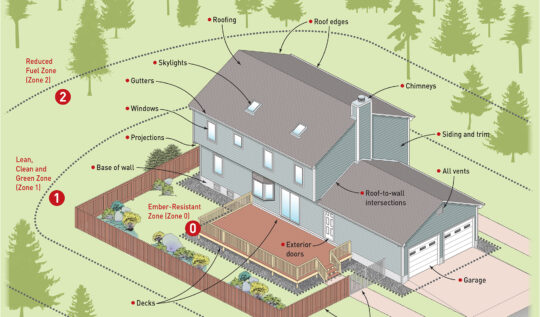
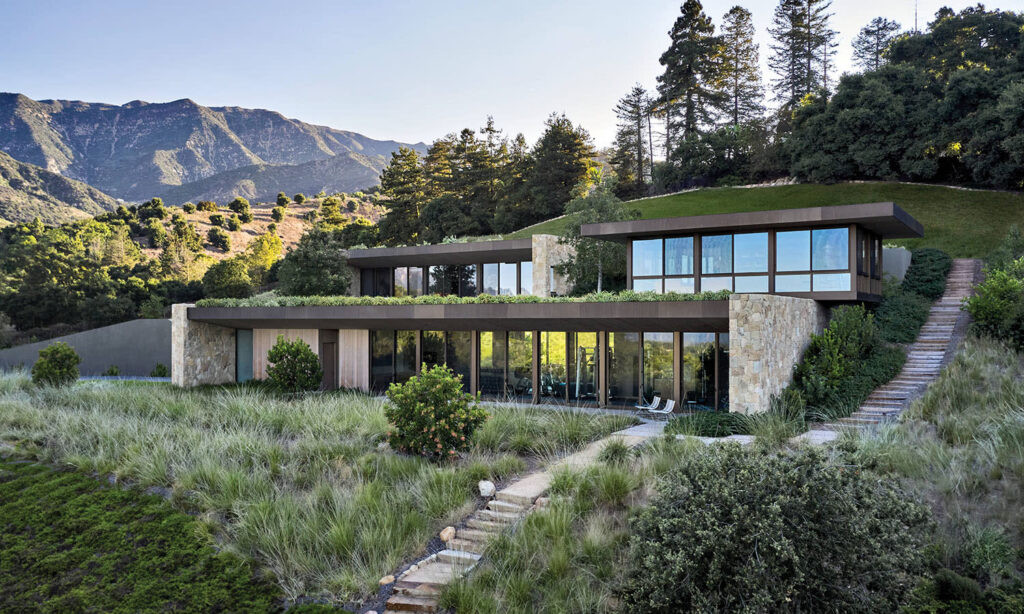
Fire resilience is not only a material question — it is also a siting and landscape question, and one that is best addressed during the construction phase rather than after the fact. The concept of defensible space, which has long been part of California’s fire safety framework, is increasingly being integrated into landscape and hardscape design as a genuine design discipline rather than a regulatory afterthought.
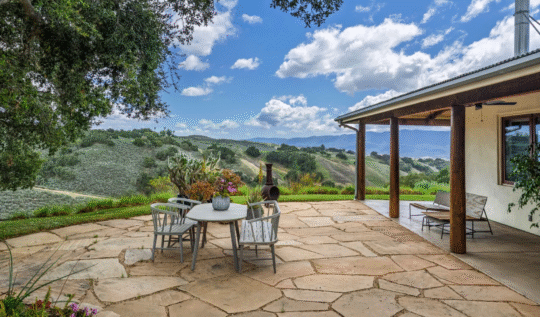
Hardscape zones around the home — stone terracing, gravel pathways, decomposed granite areas, and fire-resistant ground covers — do double duty as beautiful outdoor environments and as strategic interruptions that slow the advance of fire toward the structure. In communities like Malibu, Hollywood Hills, and Brentwood, where homes often sit on parcels with significant natural vegetation, the transition from the built environment to the landscape is a design opportunity that the best architects and builders approach with real intentionality.
We engage with landscape architects and designers during the construction phase to ensure that the site’s hardscape and softscape are coordinated with the home’s fire-resilient design strategy from the beginning. This kind of integrated thinking — across structure, envelope, and site — is what produces a home that performs as beautifully as it looks.
The Details That Define Performance
Beyond the primary material choices, fire resilience in a custom home is largely a story of details — the transitions, penetrations, and assemblies that are invisible once a home is finished but that determine how it performs over time.
Ember intrusion is one of the leading causes of home ignition in wildfire events, and it enters through the smallest gaps: utility penetrations, attic vents, the junctions between wall assemblies and roof overhangs. Addressing these details comprehensively requires a builder who is paying attention at every stage of construction, not just at the level of specified materials. Ember-resistant vent assemblies — a topic we have explored in depth in a previous post — are one critical component of a fully considered approach to fire resilience.
Eaves and soffits deserve particular attention. An open or poorly detailed eave is among the most common points of ember accumulation and ignition. Closed, continuous soffit assemblies — finished in non-combustible materials and carefully detailed at every intersection — transform the roofline from a vulnerability into a strength. On homes where the architectural expression includes deep overhangs and articulated roof forms, this level of detailing is not only protective but architecturally essential.
Building the Home You Envisioned
The most important thing to understand about wildfire-resilient construction is that it is not a category of building that stands apart from fine custom home construction. It is fine custom home construction — applied with a specific and important set of priorities layered in. The homes we are proud to have built across Southern California are not compromised by their resilience. They are defined by it.
At Triton Engineering Contractors, our founder Artin brings 30 years of hands-on construction experience to every project — experience that includes the technical depth to navigate complex material specifications and the design sensibility to ensure that performance choices enhance rather than constrain the architectural vision. If you are planning a custom home or substantial renovation in a fire-prone area and want to explore what building with both resilience and beauty looks like in practice, we welcome the conversation.