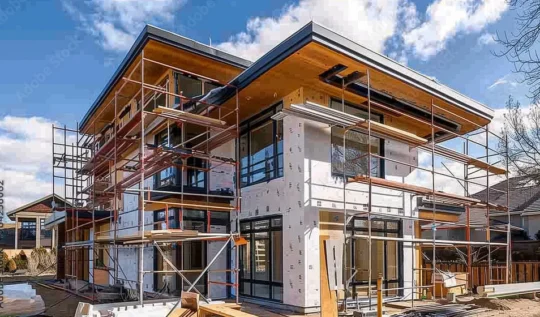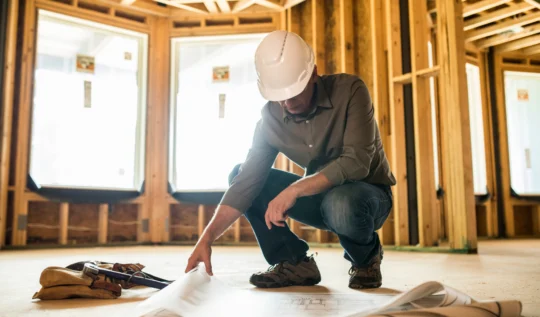
A custom home project rarely fails or succeeds because of any single decision. It’s the accumulation of hundreds of smaller ones — made by different people, on different schedules, often without full visibility into how their piece connects to everyone else’s — that determines whether a project moves smoothly or struggles to find its footing. An owner’s representative exists to hold that connective thread from the very beginning of a project through its final walkthrough. Not managing any one discipline directly, but making sure every discipline is working from the same information, at the same time, toward the same outcome.
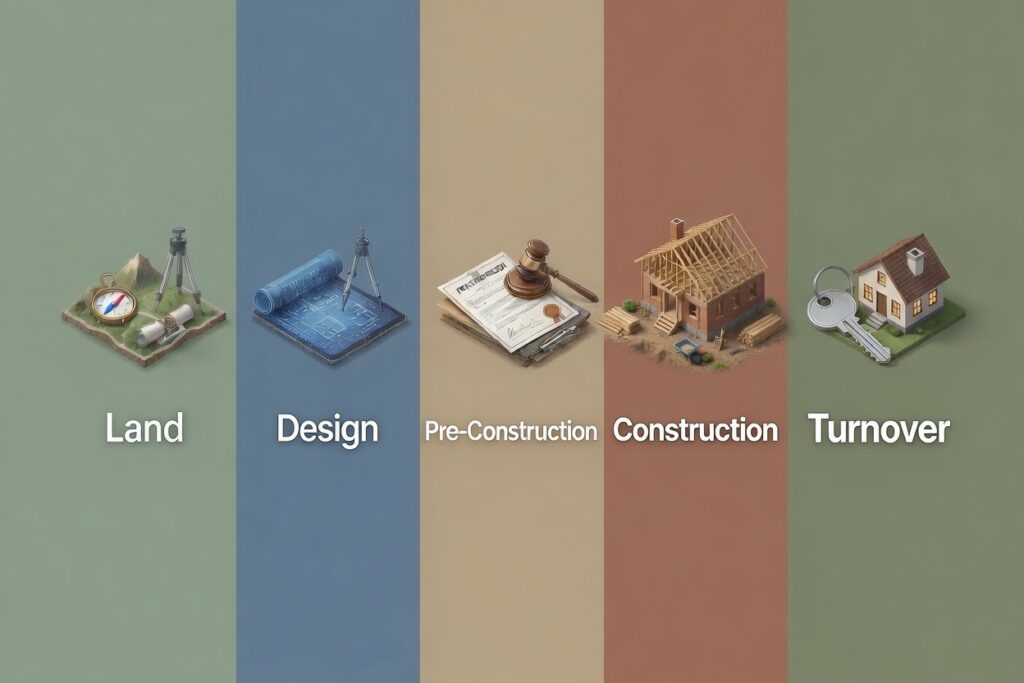
It’s a role best understood the way a conductor relates to an orchestra. Every musician on stage is a specialist, often a virtuoso, in their own instrument. The conductor doesn’t play any of those instruments. Their contribution is the thing that turns individual excellence into a unified performance — tempo, timing, balance, entrances and exits, all held together by a single point of focus dedicated entirely to the whole piece. On a custom home project, the owner’s representative function plays that role across the entire lifecycle: land acquisition, design, pre-construction, construction, and turnover.
Why Management and Coordination are the Hardest Part of a Custom Home Project
Every professional on a custom home project is excellent within their domain — that’s precisely why they were hired. The architect is a specialist in design. The structural engineer is a specialist in load paths and seismic performance. The general contractor is a specialist in building. Each of them is appropriately focused on their own scope, and that focus is what produces high-quality work.
What none of them is positioned to do, simply by the nature of their role, is hold the owner’s full picture across every party at once. The architect coordinates the design consultants toward a unified design intent. The general contractor coordinates the trades toward a completed building. Each of those is real coordination, done well, within a defined scope. What sits outside any one of those scopes is keeping every party accountable to the timeline they’ve each committed to, and making sure clear communication and cooperation keep flowing between them in the owner’s best interest. That’s where an owner’s representative operates — not replacing any team’s internal coordination, but holding every team member accountable to it, collaboratively, across the whole project. As construction management, the function is the same: keeping every specialist accountable to their commitments, continuously, across the life of the project.
This isn’t a flaw in how projects are typically staffed — it’s a natural byproduct of specialization. The more expert each team member becomes in their own scope, the more valuable it is to have someone whose only scope is keeping every commitment on track between them.
Management and Coordination Begins at Land Acquisition and Team Selection
The earliest point where this coordinating function adds value is before a project has a design team at all — during land acquisition. Evaluating a potential site means understanding how zoning, topography, utility access, and entitlement conditions will shape everything that gets built there. That evaluation is itself a coordination exercise, pulling together geotechnical, civil, and regulatory considerations into a single, clear picture the owner can act on before a purchase closes.
Once land is secured, the next coordination task is assembling the right team. An architect, structural and civil engineers, a geotechnical consultant, an MEP designer, an interior designer, and eventually a general contractor and a long list of subcontractors will all need to work in concert on this specific project. Matching the right professionals to the project’s particular character — a hillside site, an ambitious architectural program, a sophisticated technology scope — is a coordination decision made before any of those professionals have met each other. Getting that composition right early is one of the most consequential things an owner’s representative does, because a well-matched team tends to coordinate naturally from the first meeting forward.
Keeping Design Moving: Coordinating and Managing the Design Process
During design, the number of parties producing information in parallel grows quickly. The architect is developing the design intent. The structural engineer is responding to that intent with a structural integrity strategy. The MEP designer is routing systems through spaces that are still being refined. A landscape architect and a low-voltage integrator are shaping their own scopes around a floor plan that continues to evolve.
The owner’s representative’s function here is to keep that information moving accurately between parties and to track how design decisions affect the project’s budget and schedule as they’re being made — supporting the architect-owner relationship. When a structural engineer needs a decision from the architect before finalizing a detail, or when an evolving material selection has schedule implications the owner should understand, the OR is the one making sure that information reaches the right person before it becomes a bottleneck. That coordination work is what keeps design momentum steady and the owner informed at every step.
From Design to Ground: Managing the Transition Into Construction
The handoff from design to construction is one of the most coordination-intensive moments in a custom home project. Permit sets need to be finalized and submitted. Bid packages need to go out to qualified contractors and be evaluated on a consistent basis. Long-lead items — custom windows, specialty millwork, structural steel — often need to be identified and ordered before construction officially begins, or the schedule absorbs the delay later.
An owner’s representative manages this transition as a single coordinated sequence rather than a series of disconnected handoffs. Permitting strategy gets developed alongside the design team and, where needed, entitlement consultants, with realistic timeline expectations built in from the jurisdiction’s actual review process. Bidding gets structured so contractors are evaluating the same complete scope, which makes comparing proposals meaningful rather than confusing. And the budget that’s been tracked throughout design gets carried forward into a construction budget the owner can trust, because it was never a guess — it evolved alongside the design the whole way through.
Managing and Coordinating the Field: Trades, Schedule, and Change Orders During Construction
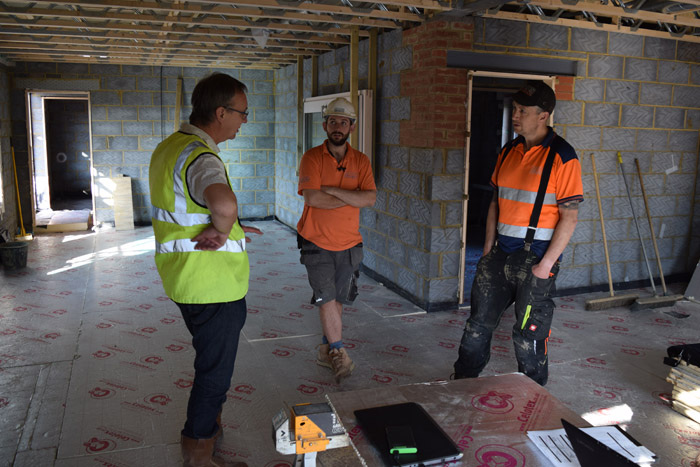
Once construction begins, the coordination challenge shifts to the field, where a general contractor is now directing what is often fifteen to twenty-five subcontractor scopes on a complex custom home. The owner’s representative’s role during this phase is to manage the project schedule, review contractor pay applications, monitor the quality of work in place, and administer the change order process on the owner’s behalf.
Change orders are a normal and expected part of any custom home build — design refinements, unforeseen site conditions, and evolving owner preferences all generate them. What matters is that each one is clearly documented, reasonably priced, and fully understood by the owner before it’s approved, so the owner is making an informed decision rather than simply signing off. This is also where the value of continuous oversight becomes most visible for owners who aren’t on-site daily — building a second home in Montecito or a retreat property in Malibu while based elsewhere, for example. A construction manager’s presence on the ground means questions get resolved and decisions get communicated without waiting for the owner’s next visit, keeping the schedule moving at the pace the project actually requires.
Carrying Coordination and Management Through to Turnover
The coordination function doesn’t end when construction wraps up. At closeout, dozens of loose threads need to be gathered into a complete, usable package for the owner: punch list items resolved across every trade, building systems commissioned and explained, warranty documentation collected from every subcontractor and manufacturer, and as-built drawings delivered before the project team disperses.
This is the phase where a project’s coordination discipline either pays off or reveals its gaps. A well-coordinated project moves through turnover efficiently because the information has been organized all along, not scrambled together at the end. An owner’s representative treats turnover with the same rigor as every earlier phase — because the owner’s experience of the finished home depends on it being complete, documented, and fully theirs from day one.
At Triton Engineering Contractors, this lifecycle-long coordination is central to how we work. Our background in commercial-multifamily and complex custom home construction — projects where dozens of trades and consultants have to move in sync as a matter of course — shapes the document discipline and coordination rigor we bring to every custom home, from the earliest site evaluation through the final walkthrough. As owner’s representative managing the construction lifecycle, our focus stays on the owner’s interests and the project’s success at every stage, working collaboratively alongside the full team rather than around it. If you’re planning a custom home and want to understand what that kind of continuous coordination looks like for your project, we’d welcome the conversation.
Key Takeaways
- A custom home project involves many specialists, each excellent in their own domain, but none positioned to coordinate the full picture — that coordination gap is what an owner’s representative fills.
- Coordination begins at land acquisition and team selection, well before a design team has been assembled.
- During design, the OR tracks how decisions affect budget and schedule, keeps information moving between the architect, engineers, and consultants, and lends its own construction expertise to that process, so the owner stays informed as design develops.
- The transition from design to construction is a critical coordination point, covering permitting strategy, contractor bidding, and long-lead procurement.
- During construction, the OR manages schedule, pay applications, quality oversight, and change orders on the owner’s behalf.
- Coordination continues through turnover, ensuring punch lists, commissioning, and documentation are complete before the project team disperses.
Frequently Asked Questions
What does it mean that an owner’s representative “coordinates” a project? It means keeping information moving accurately between every party on the project — architect, engineers, consultants, and general contractor — so decisions are made with full context and nothing gets lost between disciplines. It spans the entire project lifecycle, not just the construction phase.
Does an owner’s representative replace the general contractor? No. The general contractor builds the project, directs the subcontractor trades, and holds responsibility for the means and methods of construction. The owner’s representative works alongside the GC, managing schedule oversight, budget tracking, and communication with the owner throughout construction.
How early should coordination with an owner’s representative start? As early as possible — ideally at land acquisition, before a design team is even selected. Early coordination shapes team selection, contract structure, and the project budget, all of which are far easier to get right from the start than to correct later.
Does coordination continue after construction is finished? Yes. Turnover and closeout involve significant coordination — resolving punch list items across every trade, commissioning building systems, and collecting warranty documentation and as-built drawings before the project team disperses.
Is this kind of coordination especially valuable for owners who aren’t local to the project? Very much so. For owners building a second home or retreat property in Southern California while based elsewhere, an owner’s representative provides continuous, on-the-ground coordination that keeps decisions and communication moving without waiting for the owner’s next visit.