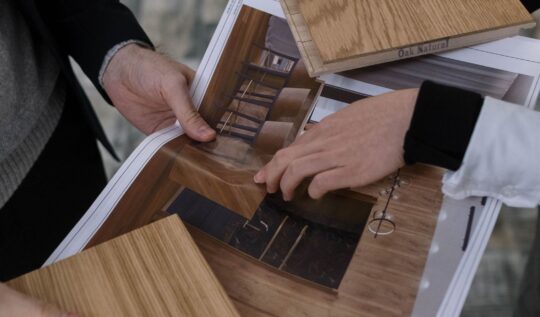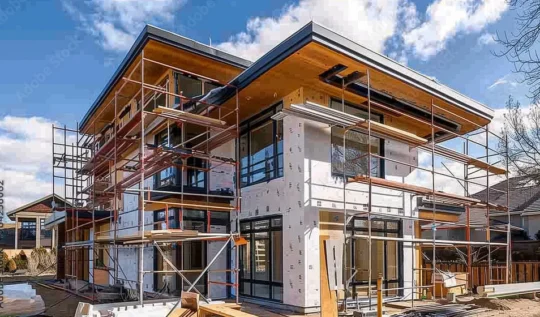
A custom home project generates an enormous amount of information, and almost none of it originates from a single source. The architect is communicating design intent. The structural engineer is responding with load requirements. The general contractor is fielding questions from a dozen trades. The interior designer is finalizing selections that affect the electrical plan. And the owner, in the middle of all of it, is trying to make confident decisions based on whatever version of that information happens to reach them.
Every one of those voices is saying something valuable. The challenge isn’t the quality of any individual conversation — it’s making sure the right information reaches the right person, at the right time, in a form they can actually use. That’s what it means to be the center of communication on a custom home project, and it’s one of the most consequential functions an owner’s representative provides. Handled well, it’s nearly invisible: decisions happen smoothly, nobody is caught off guard, and the owner always seems to know exactly where things stand. Handled poorly — or left unmanaged entirely — even a technically excellent project can feel confusing and stressful to live through.
Why Communication Requires Active Management, Not Just Good Intentions
It’s tempting to assume that good communication happens naturally when everyone on a project is skilled and professional. In practice, it doesn’t — not because anyone is failing to communicate within their own scope, but because no one’s job is to manage the connections between scopes. The architect’s communication responsibilities run toward the design consultants and the owner on design matters. The general contractor’s communication responsibilities run toward the trades and the field. Each of those channels can be working perfectly on its own and still leave real gaps at the seams between them.
This is where construction management earns its place as an active, ongoing function rather than a periodic check-in. An owner’s representative — construction manager, the same role described from two angles — is positioned specifically at those seams, making sure information doesn’t stall out at the edge of one professional’s scope before it reaches the next person who needs it. That’s a deliberate structure, not a byproduct of everyone simply doing their job well.
Where the Communication Structure Begins: Land Acquisition and Team Selection
The center-of-communication role starts earlier than most owners expect — often before a design team has even been selected. Evaluating a prospective property well means pulling together zoning information, topographic data, utility access, and entitlement considerations from several different sources into a single, coherent picture the owner can act on. That’s a communication exercise as much as a technical one, and establishing it early sets a pattern that carries through the rest of the project.
Team selection reinforces that same pattern. As the architect and interior designer come on board, and as they in turn bring on the engineers and specialty consultants who round out the team, an owner’s representative helps make sure everyone understands not just their own scope, but how their scope connects to everyone else’s. A team that starts out communicating clearly with each other tends to keep communicating clearly once the project gets more complex. A team that starts out siloed rarely closes that gap on its own later.
Managing Communication During Design: Keeping the Full Team and the Owner Aligned

Design is where the volume and speed of communication increases substantially. The architect is refining spaces. The structural engineer is responding to those refinements. An MEP designer is routing systems through rooms that are still taking shape. Each of those professionals is working from a partial, evolving picture — and each of their decisions has implications for the others.
During this phase, an owner’s representative actively manages the flow of that information: making sure a structural constraint reaches the architect before a floor plan is finalized around it, that a lighting decision reaches the electrical consultant before the rough-in plan is set, and that the owner understands what’s changing and why, well before those changes accumulate into something confusing. Construction management at this stage looks like coordination, but its real value is in the timing — getting the right piece of information in front of the right person before a decision downstream depends on it.
Coordinating Communication in the Field: Trades, Schedule, and Owner Updates
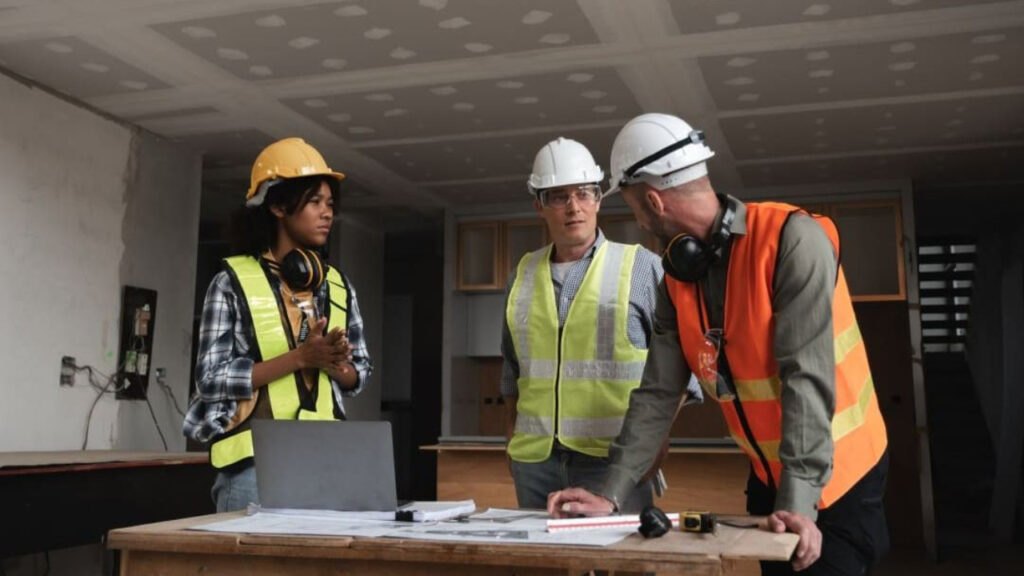
Once construction begins, the communication challenge shifts to the field, where a general contractor may be directing fifteen to twenty-five subcontractor scopes moving in parallel. An owner’s representative’s role here is to keep the schedule, the pay applications, quality control, and the change order process organized and clearly communicated — to the owner and to every party whose work depends on accurate, current information. That includes weighing in on the general contractor’s vendor and subcontractor selections, so the owner has an independent perspective confirming that the trades being brought onto the project are the right fit before they’re engaged.
Change orders are a normal part of any custom home build, generated by design refinements, site conditions, and evolving preferences. What keeps that process from becoming a source of confusion is clear communication: each change order documented plainly, priced reasonably, and explained to the owner in language that supports a confident decision rather than a rushed one. Consistent, well-organized field communication is also what allows an owner to stay genuinely informed without needing to be on-site every day interpreting what’s happening firsthand.
The Owner’s Representative as Consultant: A Direct Line to the Owner
Communication on a custom home project isn’t only about connecting other professionals to each other — it’s also about the owner’s own direct line of information. An owner’s representative functions as a consultant to the owner throughout the project: explaining what a decision means, what it costs, how it affects the schedule, and what the reasonable alternatives are, in terms the owner can act on with confidence.
That consulting relationship matters because owners are often navigating construction decisions in an unfamiliar domain, however capable they are in their own professional lives. Rather than receiving raw information from six different specialists in six different formats, the owner has a single, trusted point of contact synthesizing that information and framing it clearly. The owner still makes every meaningful decision about the project — the consulting relationship exists to make sure those decisions are made with full, well-organized context.
Why Communication Matters Most for Owners Building From a Distance
This function becomes especially valuable on projects where the owner isn’t on-site regularly — a second home in Montecito, a retreat property in Malibu, or a vineyard property in the Santa Ynez Valley, built by an owner whose primary residence is somewhere else entirely. Without a dedicated communication structure in place, those owners are often the last to know when a decision is needed, simply because there’s no consistent presence translating what’s happening on-site into something they can act on remotely.
An owner’s representative closes that distance. Questions get resolved and decisions get communicated promptly, whether the owner is a mile away or across the country, because the communication structure doesn’t depend on physical proximity to function well. That steady, organized flow of information is often what allows an owner to build confidently in Southern California while managing a life, and a schedule, centered somewhere else.
At Triton Engineering Contractors, staying at the center of communication is central to how we manage every project — keeping information moving accurately between the architect, engineers, consultants, general contractor, and owner, so nothing stalls at the edges between them. Our team’s direct experience building custom homes across Southern California, paired with a background in commercial and multifamily construction where dozens of parties have to stay in sync as a matter of course, shapes the discipline we bring to that role. As owner’s representative and construction manager, and as a direct consultant to the owner throughout, our focus stays on keeping every voice connected and the owner clearly informed from the first coordination meeting through final closeout. If you’re planning a custom home and want to understand what that kind of communication structure looks like for your project, we’d welcome the conversation.
Key Takeaways
- Good communication on a custom home project doesn’t happen automatically — every professional’s communication responsibilities run within their own scope, leaving real gaps at the seams between disciplines.
- The communication structure begins as early as land acquisition and team selection, well before design starts.
- During design, an owner’s representative manages the timing of information between the architect, engineers, and consultants so decisions get made with full context.
- During construction, organized communication around schedule, pay applications, and change orders keeps the owner informed without requiring daily on-site presence.
- The owner’s representative also functions as a direct consultant to the owner, synthesizing information from the full team into clear, actionable guidance.
- For owners building a second home or retreat property while based elsewhere, this communication structure is especially valuable, closing the distance between the owner and the project.
Frequently Asked Questions
What does it mean for an owner’s representative to be the “center of communication” on a project? It means information from the architect, engineers, consultants, and general contractor is actively managed and directed to the right person at the right time, rather than left to travel informally between parties. The owner’s representative sits at the connections between each professional’s scope, making sure nothing stalls at those seams.
Why doesn’t communication happen naturally on a well-staffed project? Every professional communicates well within their own responsibilities, but no one’s role is specifically to manage the connections between disciplines. An owner’s representative fills that gap as a dedicated, active function rather than something that happens on its own.
Is the owner’s representative the same as a construction manager for communication purposes? Yes — at Triton, owner’s representative and construction manager describe the same role from two angles. The communication and coordination work is central to both, spanning the full project lifecycle rather than any single phase.
How does an owner’s representative act as a consultant to the owner specifically? Beyond coordinating other professionals, an owner’s representative explains decisions directly to the owner — costs, schedule implications, and reasonable alternatives — in clear terms, so the owner can engage confidently. The owner continues to make every meaningful decision; the consulting relationship simply ensures those decisions come with complete context.
Why does communication matter more for owners who aren’t on-site regularly? When an owner is building a second home or managing a project from another city, a strong communication structure means questions get resolved and decisions get communicated promptly regardless of physical distance, keeping the project moving without waiting for the owner’s next visit.